Why Your Dentist Stopped Accepting Your Insurance Plan
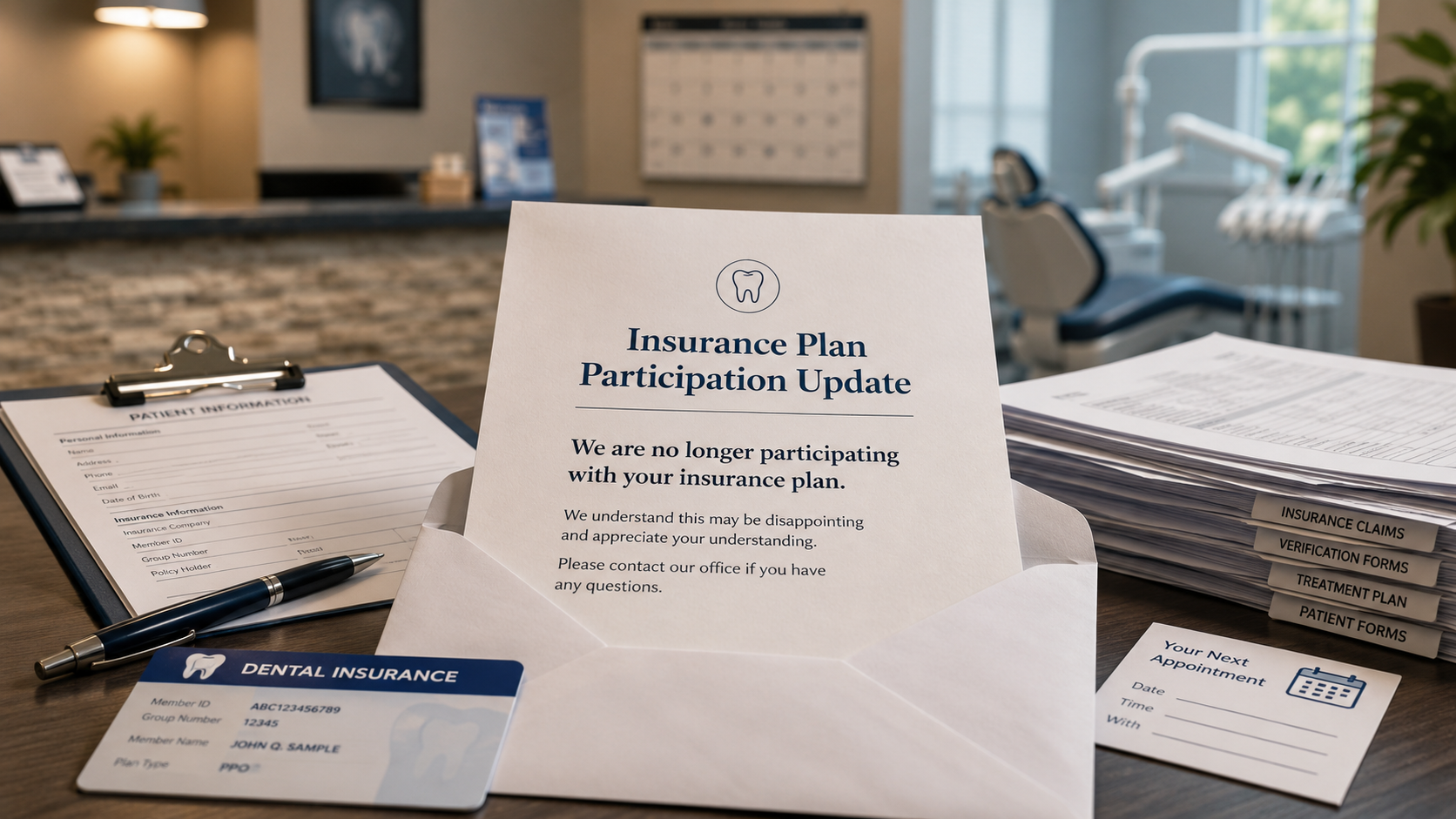
You get a letter in the mail, or maybe you find out when you call to book your next appointment. Your dentist’s office is no longer accepting your insurance plan. You have been going there for years. Nothing changed on your end. You feel dropped.
Here is what probably happened on their end.
A dental office is a small business, usually with somewhere between 3 and 15 employees. Every person on that team does work you see and work you do not. The dental assistant who greets you in the treatment room is also the person who prepares the instruments, assists the dentist during procedures, takes impressions, manages sterilization, and helps keep the clinical side of the office running safely. When that person leaves and cannot be replaced, the office does not just lose a pair of hands. It loses a significant share of its daily capacity.
Now add the insurance side. Every plan your dentist participates in comes with its own paperwork – its own claim forms, its own approval requirements, its own rules about what is covered and what is not. Some plans reimburse the office enough to cover the cost of the care. Some do not. When the office is fully staffed, the team can absorb the administrative load across enough people to make it work. When the team gets smaller, something has to give.
What gives is usually the plan that requires the most paperwork for the least reimbursement. Not because the dentist wants to drop your plan. Not because the dentist does not care about the patients on it. But because keeping that plan active means the office cannot serve the patients it still has the capacity to see. It is a math problem dressed up as a coverage decision.
And here is the part that makes it worse: the two problems feed each other. When the team shrinks, the office drops plans. When the office drops plans, patients lose access. When patients lose access, the dentist sees fewer people – which means less revenue to offer competitive wages – which makes it harder to hire the next team member. The cycle does not break on its own.
What this means for you
If your dentist drops your plan, it is almost never about you or your plan specifically. It is usually about the office running out of capacity to handle everything at once.
Before your next appointment, call and ask: “Are you still accepting my specific plan?” Do not assume. Directory listings and even your insurance company’s website can be months out of date. And if the answer is no, ask if they can recommend another office that does accept your plan – most practices know who in their area is still participating, and a personal referral is worth more than a directory search.
If you are having trouble finding any dentist who accepts your plan, community health centers and dental school clinics often accept a wider range of coverage. Visit our Find Care page for options near you.