Does Where You Live in New Jersey Decide Whether You Get Dental Care??
A family in Warren County had been driving 35 minutes each way to see a dentist for years. It was not ideal, but it worked. Then their longtime dentist retired, the practice closed, and the family started calling around. The closest office accepting new patients turned out to be 50 minutes away. Their relatives down the Shore could not understand the problem. “Just call another office,” they said. The family knew the answer their relatives did not: in their part of the state, there was not another office to call.
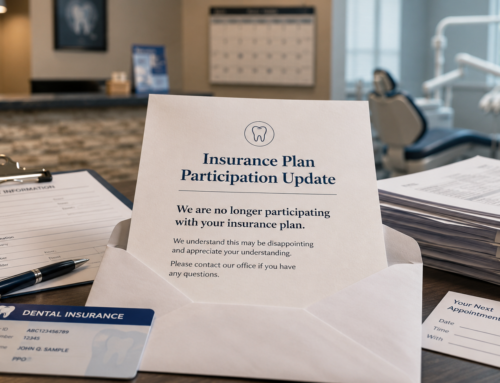
Meanwhile, in a neighborhood in Newark, a mother with two kids on Medicaid had the opposite version of the same problem. There were dental offices on her block and the next block and the block after that. Not one of them was accepting new Medicaid patients. She had coverage. She had proximity. She did not have access. The offices were there, but the door was not open to her.
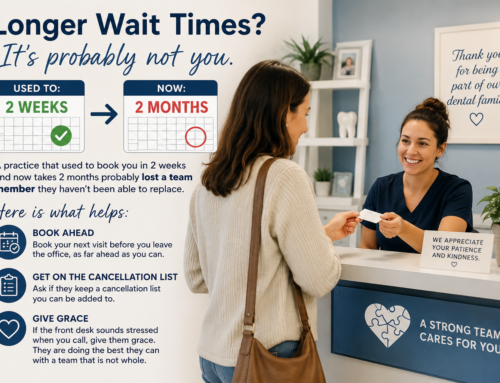
And in a suburb in Morris County, a family with good employer dental coverage was discovering their own version of the gap. Their dentist’s office had lost two hygienists in the past year, and the wait for a routine visit had stretched from two weeks to three months. They had insurance. They had a dentist. They did not have a team that could see them.
Three families. Three different parts of New Jersey. Three completely different experiences of the same structural problem.
What is actually happening
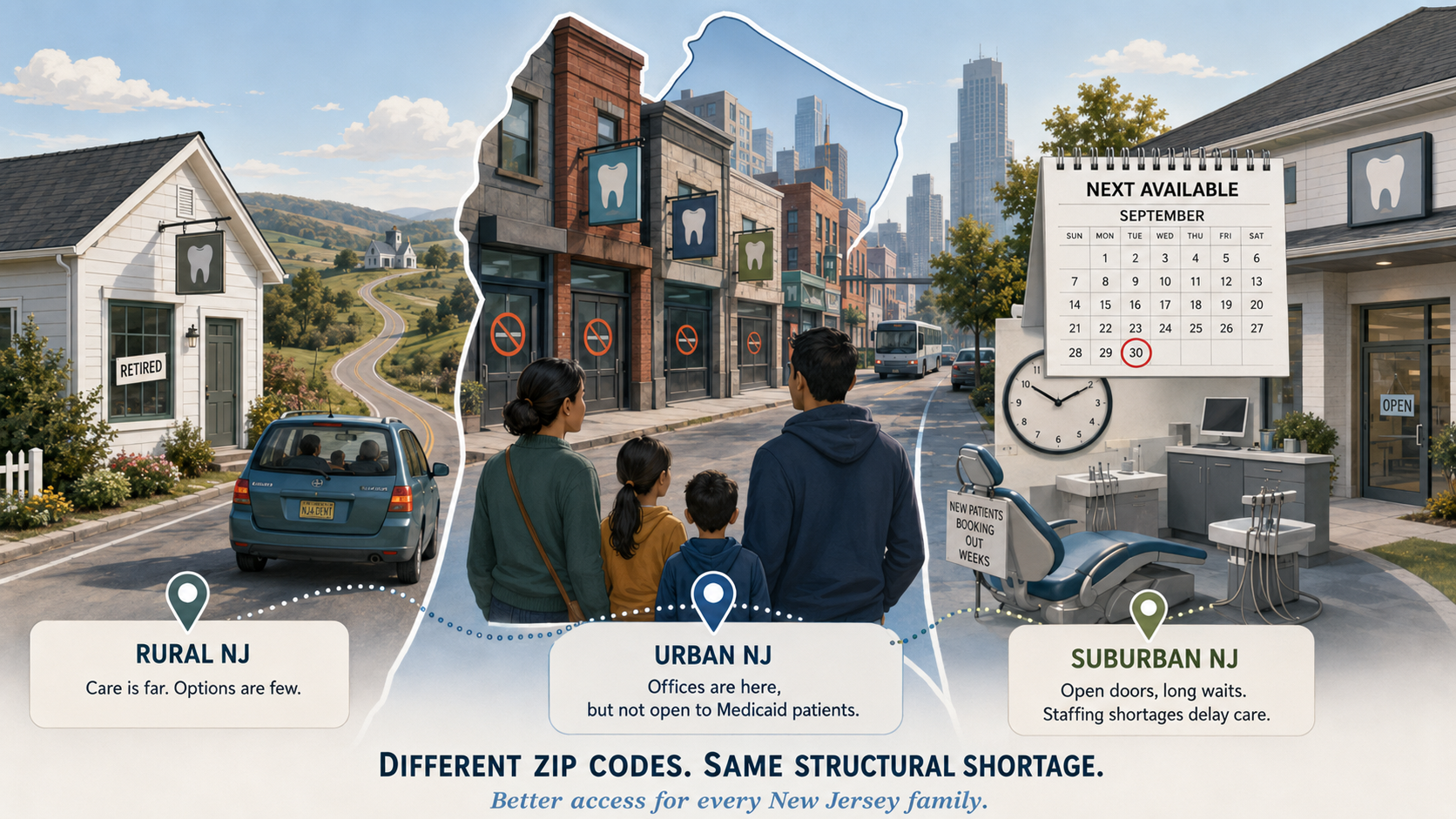
The dental care team shortage does not hit every community the same way. It hits different communities in different ways – and understanding the difference matters because the solution for each one is different too.
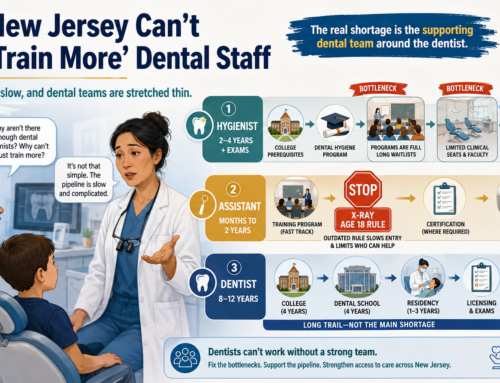
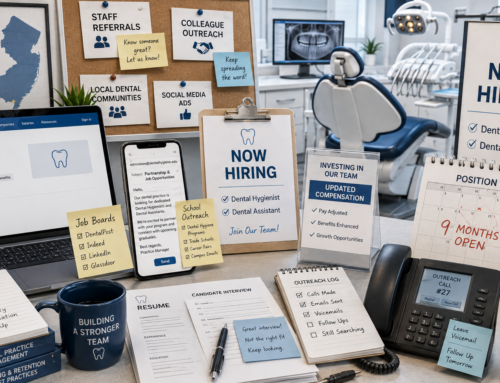
In rural counties in the western and southern parts of the state, the problem is density. There are fewer dental offices to begin with, which means every time a dentist retires or a practice closes, the nearest alternative might be 30 or 45 minutes away. Recruiting hygienists and assistants to these areas is harder because the commute is longer and the patient volume is lower. A dental office in Sussex County is competing for the same hygienists as an office in Bergen County – and Bergen County can usually offer a shorter drive and a higher wage.
In urban communities, the problem is not distance. It is economics. The offices are physically there, but many of them cannot afford to accept Medicaid or other public coverage because the reimbursement does not cover the cost of delivering care. A neighborhood can have five dental offices within walking distance and still have no access for the families who need it most. The offices are not being greedy. The math does not work.
In suburban communities, the problem looks different again. Offices are open, they accept most plans, and the dentists are there. But the team around the dentist is thinning. When a practice loses a hygienist or an assistant and cannot replace them, appointment availability quietly shrinks for everyone – even patients with great coverage. The wait grows. The schedule tightens. And the patients who need care soonest are the ones who feel it first.
The common thread
All three patterns trace back to the same root: the dentist-led care team is under pressure everywhere in New Jersey, and that pressure shows up differently depending on where you live. Rural communities feel it as distance. Urban communities feel it as closed doors. Suburban communities feel it as longer waits. But in every case, it is the team – not the building, not the equipment, not the demand – that determines whether care is available.
What this means for you
If you live in a rural part of New Jersey, plan ahead. Book preventive visits as far in advance as possible, and know where the nearest community health center or dental school clinic is before you need urgent care. The Find Care page has tools to help you locate one.
If you live in an urban community and are struggling to find a dentist who accepts your coverage, start with community health centers. They accept Medicaid by design and they are built to serve the communities around them. Do not rely on your insurance directory alone – more than a third of Medicaid dental listings in NJ are inaccurate.
If you live in the suburbs and your wait time has suddenly grown, it is almost certainly a staffing issue. Ask if your office keeps a cancellation list. Book your next visit before you leave. And know that your dentist’s office is not slowing down on purpose – they are short a team member they are trying hard to replace.
No matter where you live, the access problem is real. It just wears a different mask depending on your ZIP code.